About THE Host

meet

JaNet Rosseth

Founder & CMO, Cadence Marketing Solutions, LLC

Meet Your Host: Janet Rosseth


For more than 25 years, Janet Rosseth has helped multifamily organizations cut through complexity and optimize the way marketing drives performance.


As founder of Cadence Marketing Solutions, she focuses on clarity, alignment, and systems that empower teams to work smarter—not louder.

On the Optimized podcast, Janet brings that same philosophy to the mic:


Real insights. Zero fluff. Always optimized.


Through conversations with owners, operators, marketers, and industry thinkers, Janet helps listeners master the evolving landscape of multifamily marketing—one earbud at a time.


REACH OUT TO ME
Woman with blonde hair, smiling, in a light blue collared shirt.

Podcasts

Podcast cover: Janet Rosseth, host of

Optimized!

A Marketing Performance Podcast

We'll dig into topics that impact those who influence multifamily marketing to help you achieve higher performance, more efficient work models, better decision-making, and new perspectives!

Blog & articles

By Jennifer Carter March 1, 2026
Optimized! Season 3, Mini-Series
Woman smiling, title:
By Janet Rosseth February 10, 2026
The RETCON 2025 Conference was recently held in Las Vegas, and it’s clear that our industry is standing at the intersection of rapid innovation and the need to double down on human connection. Here’s a look at the top takeaways and trends that multifamily leaders are focusing on right now: 1. Blending Tech and Humanity It’s not about choosing between technology and people — it’s about making them work in harmony. Tech should simplify processes and free up time for your team to focus on what matters most: resident relationships. 2. Centralization is Gaining Momentum Companies are streamlining operations by centralizing admin tasks, leasing support, and even maintenance troubleshooting. The result? On-site teams can focus on delivering an elevated resident experience and becoming community leaders rather than being buried under admin tasks. 3. Change Management is Non-Negotiable Technology rollouts require careful planning and communication. Piloting programs, explaining the "why," and involving on-site teams from the start are key to successful adoption. 4. Data + Curiosity = Smarter Decisions Operators are relying heavily on data, but they also recognize the power of curiosity. Listening to frontline teams and continuously asking questions ensures decisions are both informed and people-focused. 5. AI: The Ultimate Assistant (Not a Replacement) AI is streamlining everything from lead qualification to maintenance requests. But everyone agrees: human handoffs need to be seamless. Done right, AI is your team’s best assistant — not their competitor. 6. Hospitality is the Future of Multifamily Your community isn’t just a property; it’s an experience. From concierge-style services to activated amenity spaces, the industry is taking cues from hotels and hospitality brands. 7. Speed is Everything Leads don’t wait — 45% of opportunities disappear if not responded to within four hours. Two-hour response times are the new norm. CRMs with built-in AI are no longer a luxury. 8. Build a Flexible Tech Stack APIs and integrations are key. One-size-fits-all solutions won’t cut it anymore. Operators are building customized tech ecosystems designed to evolve with their business. 9. Urban Markets Are Watching Closely Urban cores are beginning to show signs of resurgence, but there’s still caution in the air. Creativity will be key to navigating the urban-suburban balance in the coming years. 10. Foster a Culture of Curiosity Curiosity leads change. Companies that encourage learning, experimentation, and open dialogue will be best positioned to lead.  In Summary The biggest lesson from RETCON 2025? Success in multifamily comes down to balancing innovation with human connection. Thriving in this next chapter will require investment in technology and a shift in hiring strategy to highly trained tech administrators, and skilled customer service teams to master the tech hand-off. Stay curious. Stay connected. And most importantly, stay human.
Text overlay:
By Janet Rosseth September 22, 2025
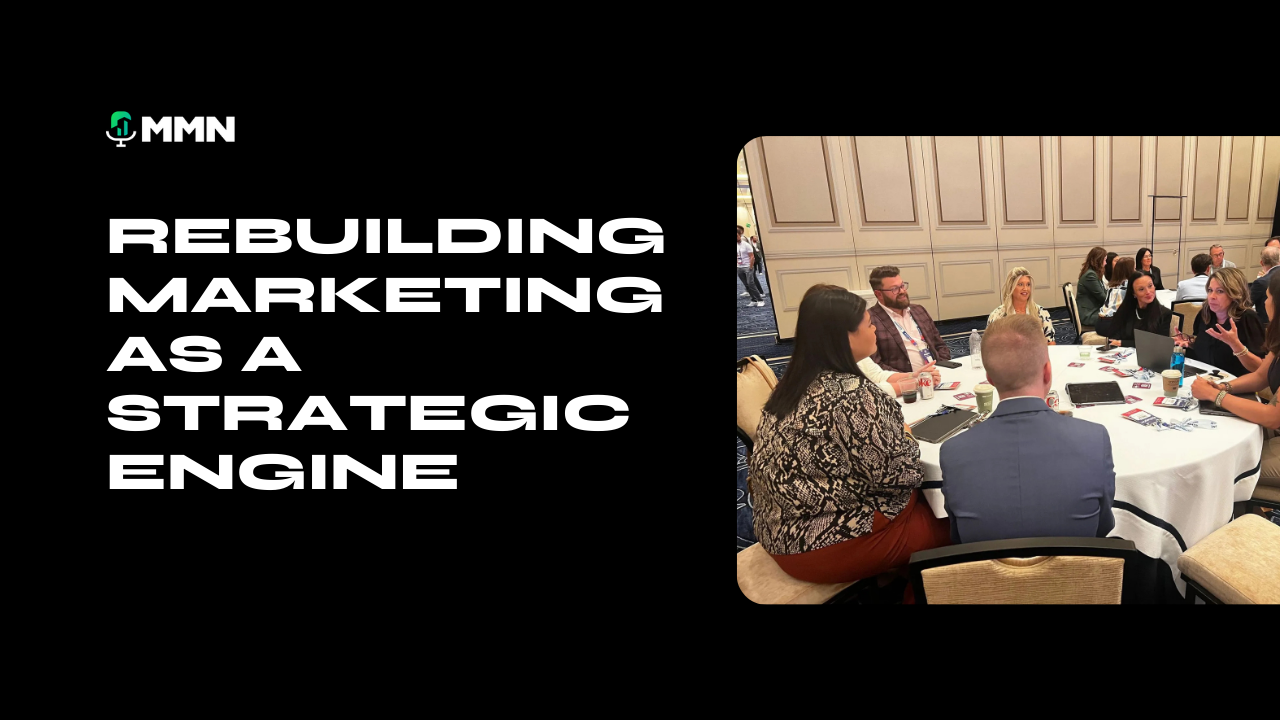
One of the best parts of Blueprint this year was the chance to host a roundtable on a topic that fires me up: how marketing moves from “support” to being a true strategic engine for multifamily organizations. We titled the session From Brand Voice to Business Impact because there really is no “one size fits all” in this space. Some marketing teams are lean and scrappy. Others are larger and highly specialized. What matters most isn’t the org chart, it’s the vision and the impact. The leaders who stand out are building teams that drive growth, shape resident experience, and influence the business in meaningful ways. The leaders who joined me I couldn’t have asked for a better group around the table: Shelly Steitz , Consultant at Cadence Marketing Solutions David Keinert , SVP of Operations at AEON Laurel Zacher, Consultant at LZ Strategic Marge Enrique , Senior Director of Marketing, Westhome Property Management Katie Nelson , Consultant at Lustra Multifamily Kristy Dale , Leadership & Technical Trainer at Pegasus Residential Amy Barricelli , SVP at RR Living Josh Draughn , VP of Marketing & Customer Experience, Weidner This mix of operators, consultants, trainers, and senior marketers brought perspectives that were both honest and practical. The conversation had real range, from the basics of structure to the bigger picture of positioning marketing as a business driver. Highlights from the discussion Future-ready teams : Agility matters. Leaders are cross-training, balancing creative and analytical skill sets, and knowing when to lean on outside specialists. Systems that work : With tech stacks ballooning, companies are starting to see the need for dedicated marketing ops roles to keep everything moving smoothly. Marketing as a profit center : The ability to track revenue impact and customer experience outcomes is what cements marketing’s seat at the table. Talent strategies : Whether you’re scaling from five to forty-seven team members, or running a two-person powerhouse, the focus is the same - deliver today while building for tomorrow. Seamless brand experience : Marketing sets the tone, but it’s onsite teams that bring the brand to life. Continuous training and tools like Canva kits help ensure consistency. Why this conversation sticks What stood out most to me wasn’t just the ideas (though there were plenty!). It was the willingness of everyone at the table to be candid about what’s working, what’s not, and how they’re navigating it all. That kind of collaboration is what makes our industry better. I left energized, grateful, and honestly a little in awe of what can happen when you put the right people in a room together. This isn’t the end of the conversation. I’ll be unpacking more of these themes with my fellow roundtable participants on upcoming episodes of Optimized!. If you’re wrestling with how to structure your marketing team, align with operations, or simply make a bigger impact, queue up a podcast episode.

Title slide:
By Janet Rosseth August 20, 2025
In the ever-evolving landscape of marketing, the multifamily industry is witnessing a significant shift from traditional print methods to dynamic digital strategies. This transition is not just a trend but a necessity for staying competitive and reaching a broader audience. Let's explore how this change is reshaping the industry. ‍ The Decline of Print Marketing: For decades, print marketing was the cornerstone of multifamily advertising. Brochures, flyers, and newspaper ads were the primary tools for reaching potential tenants. However, with the rise of digital platforms, these methods are becoming less effective. As one industry expert noted, "The reach and immediacy of digital marketing simply can't be matched by print." ‍ Embracing Digital Channels: Digital marketing offers multifamily properties a plethora of opportunities to engage with potential tenants. From social media campaigns to targeted email marketing, the options are vast and customizable. A property manager shared, "Our digital campaigns have allowed us to connect with a younger demographic that we couldn't reach through print." ‍ The Role of Data and Analytics: One of the most significant advantages of digital marketing is the ability to track and analyze data. This capability allows multifamily marketers to refine their strategies and improve ROI. "Data-driven decisions are transforming how we approach marketing," said a digital marketing strategist in the industry. ‍ The transition from print to digital marketing in the multifamily industry is more than a shift in tactics; it's a transformation in how properties connect with their audience. As digital platforms continue to evolve, staying ahead of the curve will be crucial for success. Subscribe now to stay updated on the latest trends in multifamily marketing.
By Janet Rosseth July 19, 2025
“This wasn’t about getting it perfect — it was about getting it moving.” That one line, shared by Mike Wolber on a recent episode of the Optimized! podcast, perfectly captures the spirit of a grassroots movement that swept across the multifamily industry in early July.  When devastating floods hit Central Texas, there wasn’t time to form a committee or build a campaign deck. The need was immediate — and the response had to match. ‍ The Idea A simple text thread. A Google Form. A shared belief that we can do something. That’s how A-List Runs for Texas was born — an effort to rally the multifamily community to raise funds and awareness by logging miles and sharing a donation link. ‍ The Reach Within hours, the movement caught fire. Industry professionals across the country put on their running shoes, made donations, and started sharing the effort. Leaders and teams alike joined in — not because they were asked to, but because they felt the call. ‍ The Outcome In just five days, the campaign raised over $47,000 and logged 3,500+ miles . No fancy tech stack. No multi-channel rollouts. Just a clear goal and the will to act quickly. ‍ The Impact The funds are now being distributed directly to support families impacted by the flooding in Central Texas. And beyond the numbers, A-List Runs for Texas became a story about what’s possible when we stop waiting for “perfect” and just start showing up. ‍ Want to hear how it all unfolded? In this special episode of Optimized!, Janet Rosseth and Mike Wolber walk through the behind-the-scenes of launching the campaign — from idea to impact. It’s a conversation about leadership, momentum, and the power of a responsive community.